
berita
14 Nov 2020
THE DIFFERENTIATION OF WORK ETHICS BETWEEN JAPAN AND INDONESIA IN THE WORKPLACE
THE DIFFERENTIATION OF WORK ETHICS BETWEEN JAPAN AND INDONESIA IN THE WORKPLACE.
Friday, November 13, 2020 - 11.10 a.m

SMK MUTU TUBABA - Ethos is a discipline that examines one's morality or the moral standard of a society, while ethic means expected standard in the term of your personal and social welfare. It concludes honesty, morality, responsibility etc. In short, work Ethos is at the heart of why we work, what drives us, and gives us purpose and meaning in the workplace.
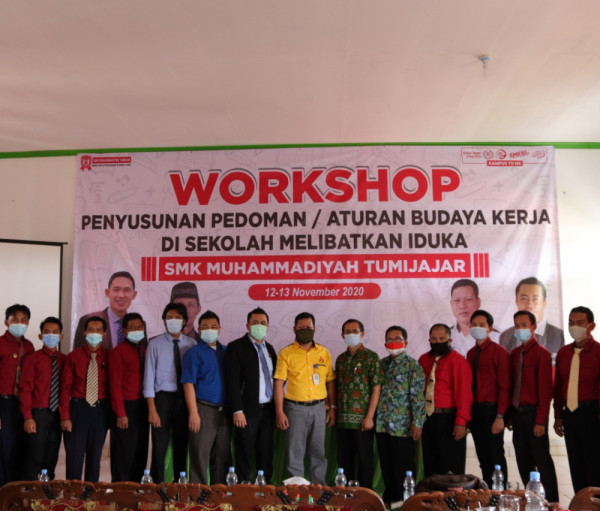
The work ethic of Japanese and Indonesian is very different. Today is the second day of the Vocational School Work Culture Implementation Workshop at SMK MUTU TUBABA.
Two of the presenters who attended were from IDUKA, including IDUKA INDOJAPAN and LBUM-Metro. He is Heri Suripto, S. P, born in Metro, September 2, 1985 and currently serves as Director of IndoJapan Lampung. Continued, the second speaker, I Nyoman Suwidiya, who lives in Metro as also the Director of Mitsubishi Lautan Berlian Utama Motor - Metro.
Globally, the topics conveyed were the same, namely about the Work Culture at each IDUKA. It's just that the application of a different culture between working in Japan and working in Indonesia is what makes the difference.
Heri Suripto, S. P as the Director of Indojapan, explained a lot about the cultures of Japanese people in their daily life and work. Among them; Bunkai, Keishan, Bushido and Keizen. Uniquely, he taught a little Japanese to the attendees.
The first is Bunkai, which means Japanese Culture, people in Japan practice the culture of being on time, 3 S, shy, sincere work spirit, and apologizing if they make mistakes in their daily life. Second is Keishan, which means persistence, seriousness, creative and innovative in its application. They also apply the 5 S (Go Esu) namely Seiri, Seiton, Seitso, Seiketsu, and Shitsuke (concise, neat, clean, care for, and diligent).
Followed by the third is Bushido, which means responsibility, focus on taking notes, double-checking and reporting according to the instructions given. While the last one is Kaizen, which means significant development and improvement.
Heri Suripto, S. P. also explained that the learning pattern in Japan from an early age was to educate attitudes and culture which prioritized academic intelligence, so that children have character since they were young.
Interestingly, at the end he gave games as a small implementation of work culture in Japan, which involved all the PTK SMK MUTU TUBABA in the hall. As a result, only a few PTK were successfully on time in completing the games.
Not much different from the first speaker, the second speaker, I Nyoman Suwidiya, also explained the habits, cultures and characters of working at Mitsubishi Lautan Berlian Utama Motor. He said that the purpose of work culture is to hone soft skills, honesty, responsibility, visionary, cooperation, fairness and care.
"discipline, honesty, dedication and integrity, active and professional thinking, effectiveness and results, all of which are summarized in the goals of work culture". he said.
Sucipto S.Pd. as the vice principal of the curriculum field, he also urged them to improve their performance to educate students, because students with character are reflected in our upbringing. "let's improve our performance to educate our students, students with character are reflected in character education as well". concluded Sucipto, S,Pd. (adr/asr)


Categories
Recent Posts


